Calcio Storico Fiorentino
Modern day gladiators
Date:2018Location:Florence (Italy)
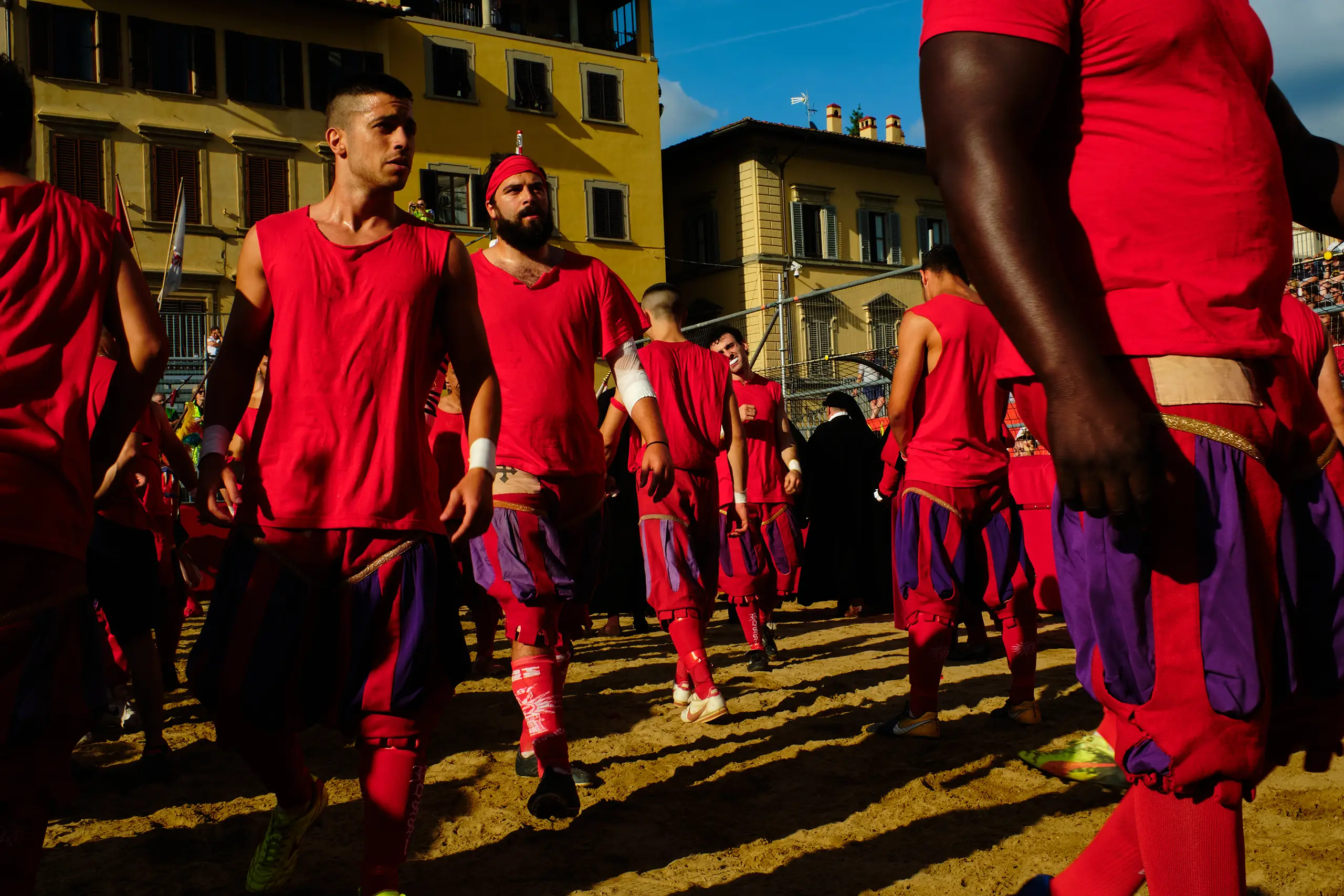
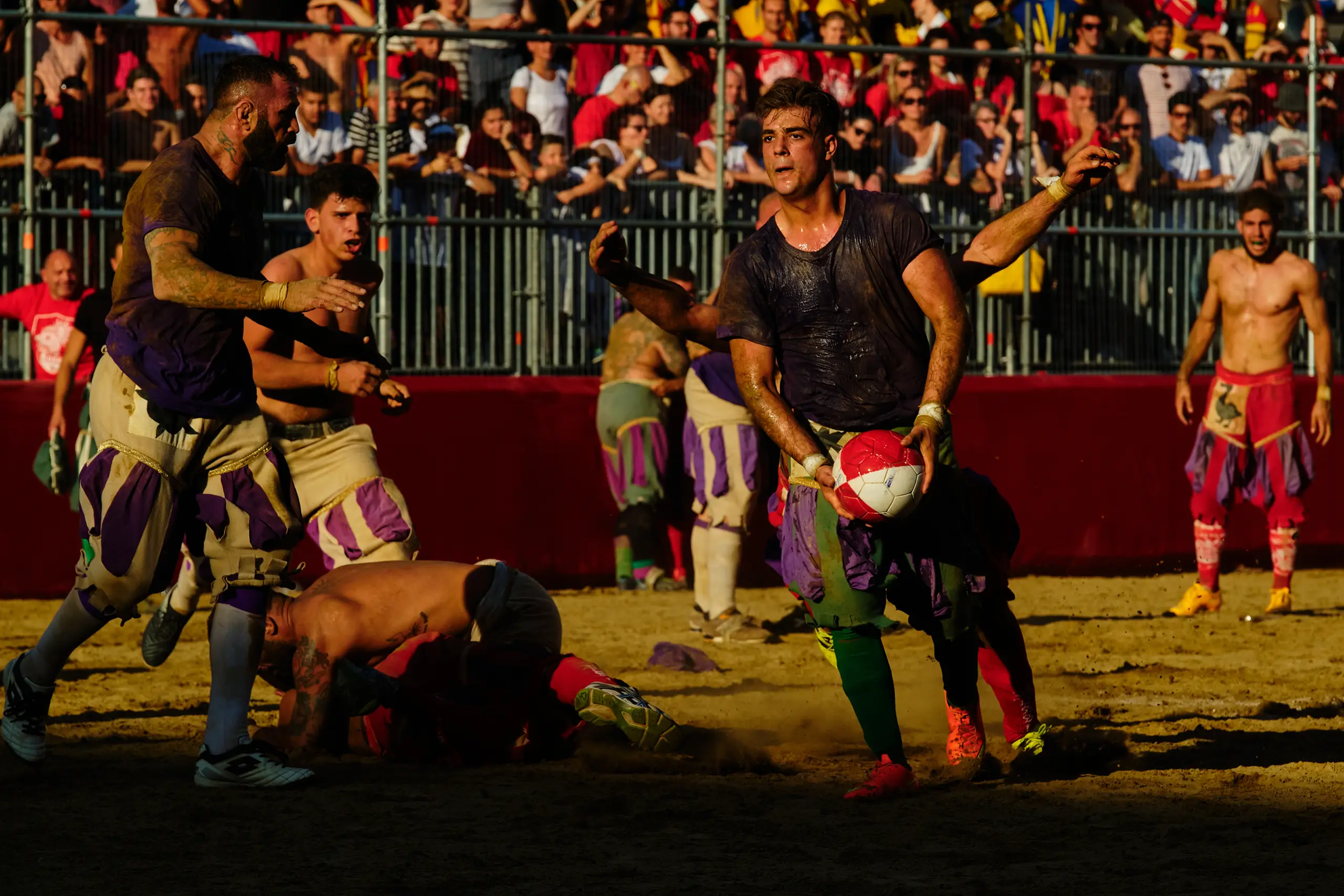
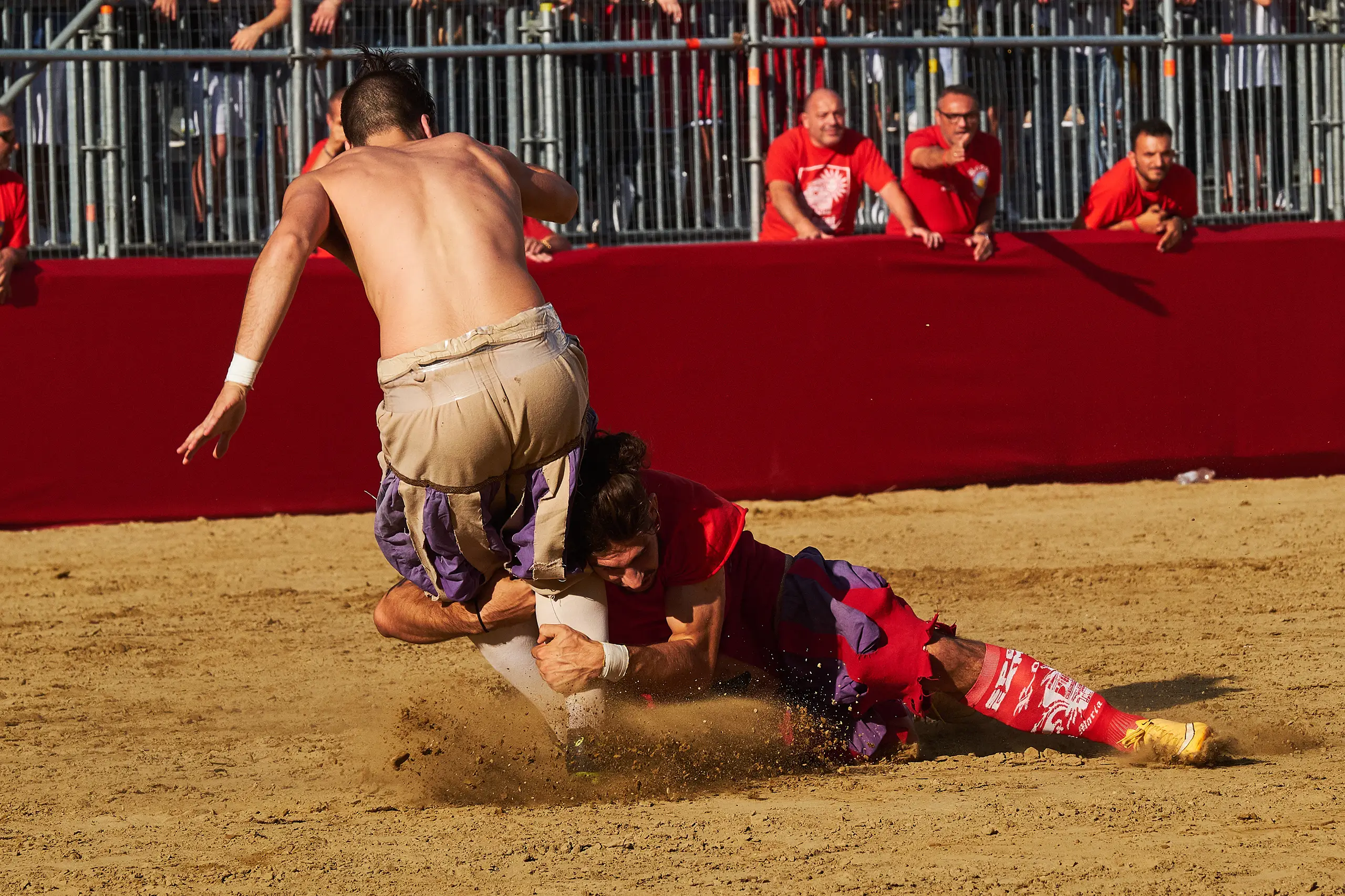
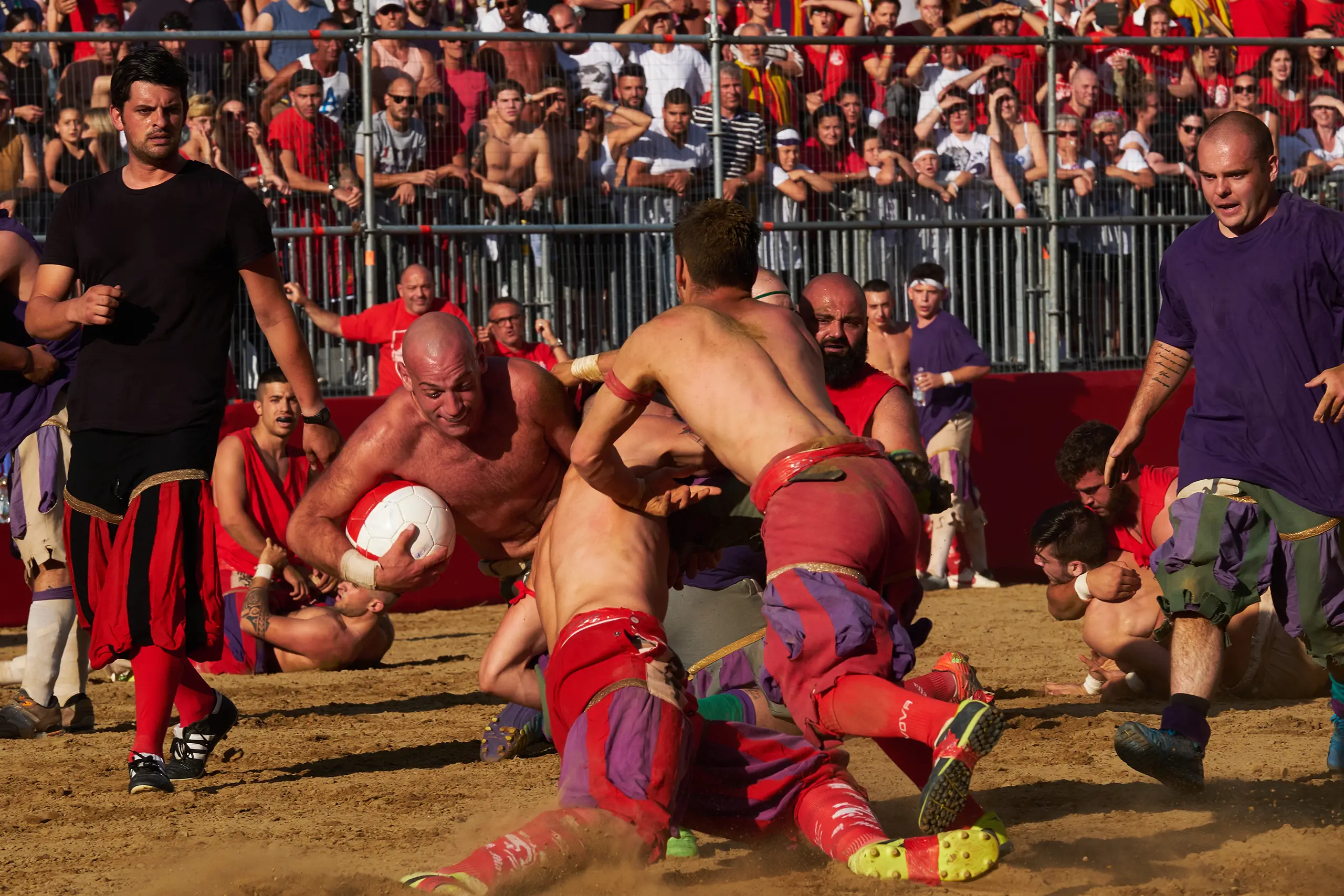
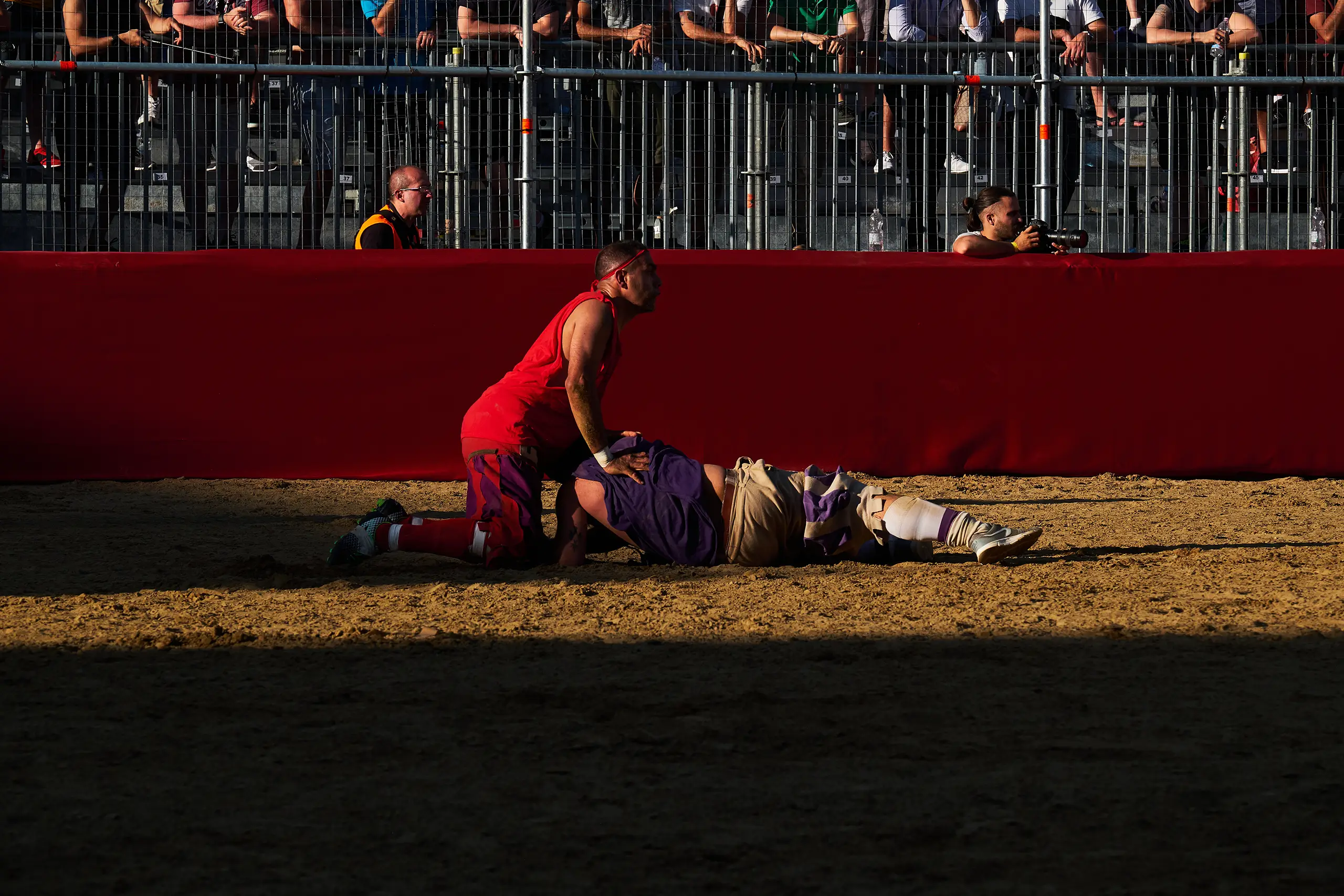
Calcio Storico Fiorentino sees twenty-seven calcianti per side face each other in the sand arena set up in Piazza Santa Croce, a discipline originating in the 16th century in which rugby, wrestling and football merge into a regulated physical clash.
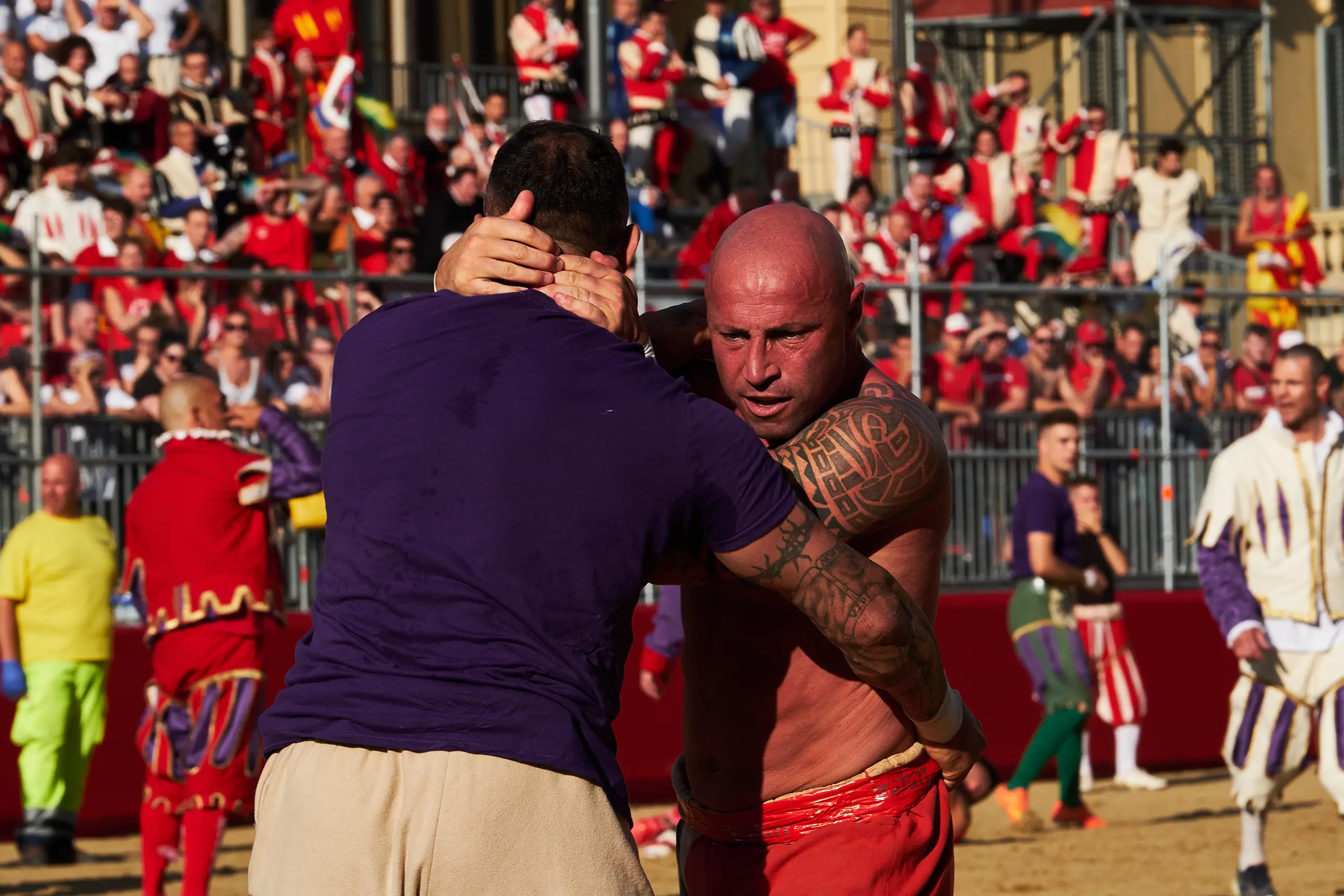
Codified in 1580 by Giovanni de' Bardi, the game comprises 50 minutes of continuous play where fist fights and tackles are permitted to stop opponents and deposit the ball into the opposing net to score a caccia. A hierarchical system composed of a Referee, six linesmen, a Match Commissioner and a Master of the Field oversees the legality of the duels, which are strictly limited to one-on-one combat and free of strikes to the head or neck.
To curb off-field violence, modern regulations impose stringent requirements: participants must be under forty years of age and hold a clean criminal record regarding major offences.
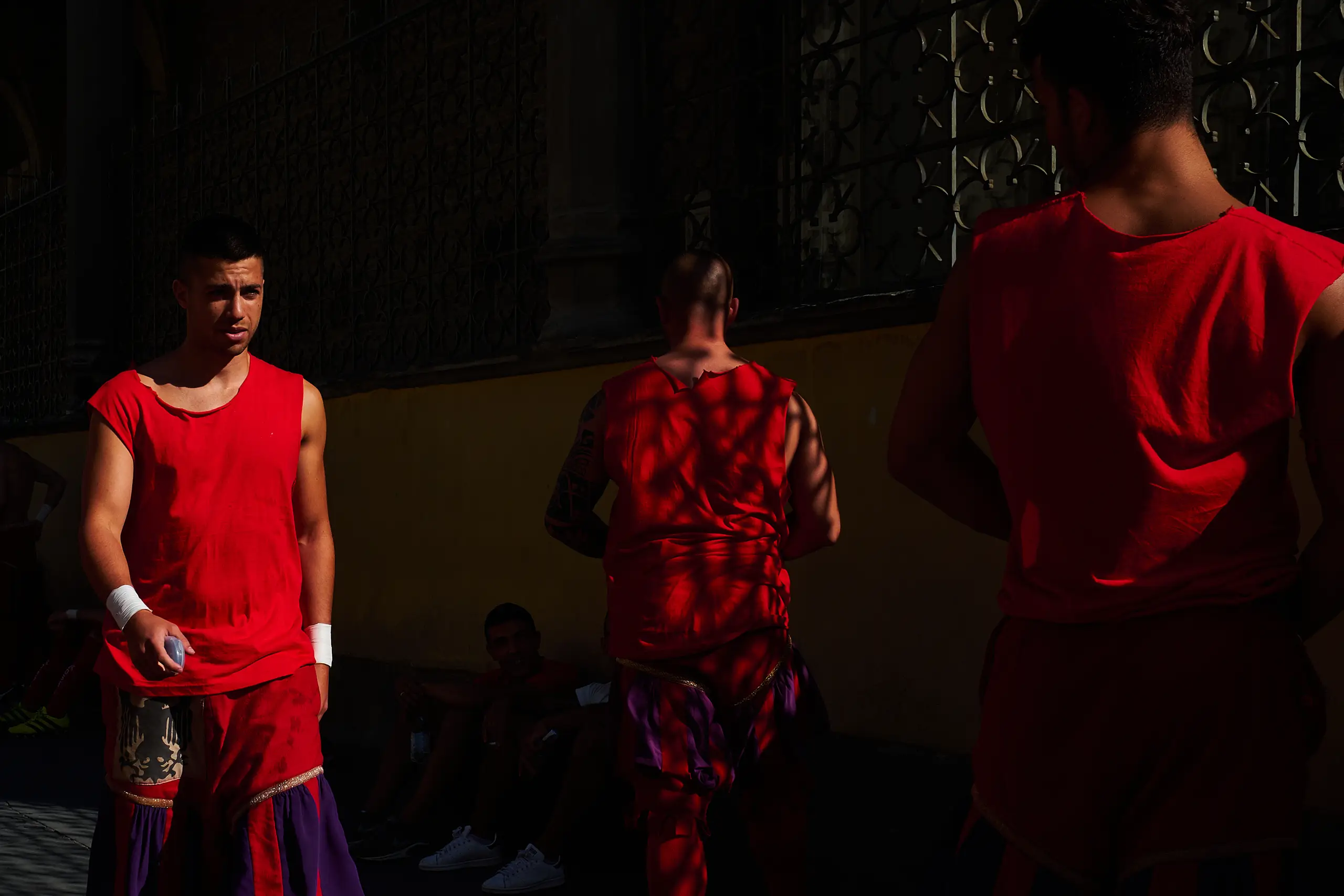
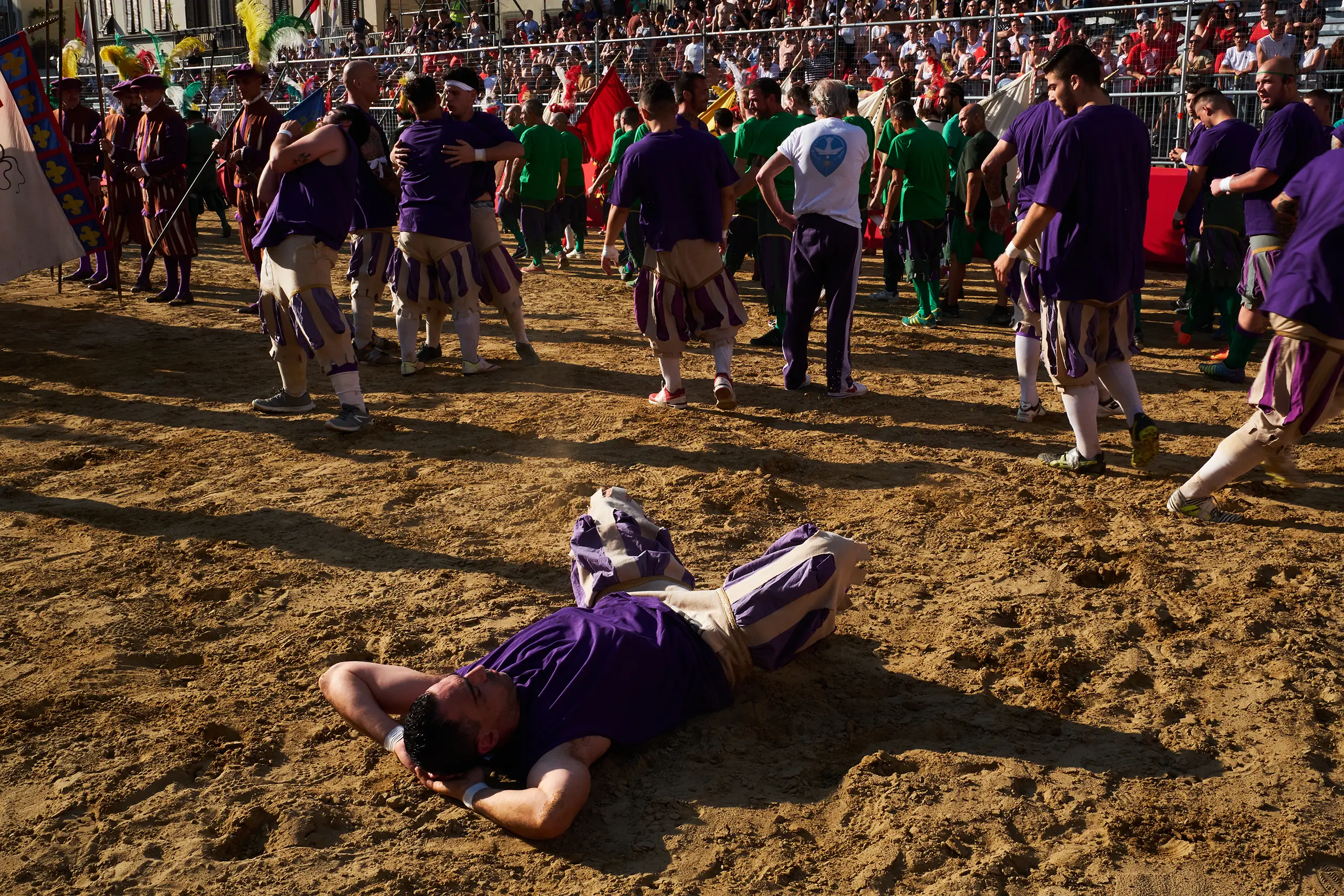
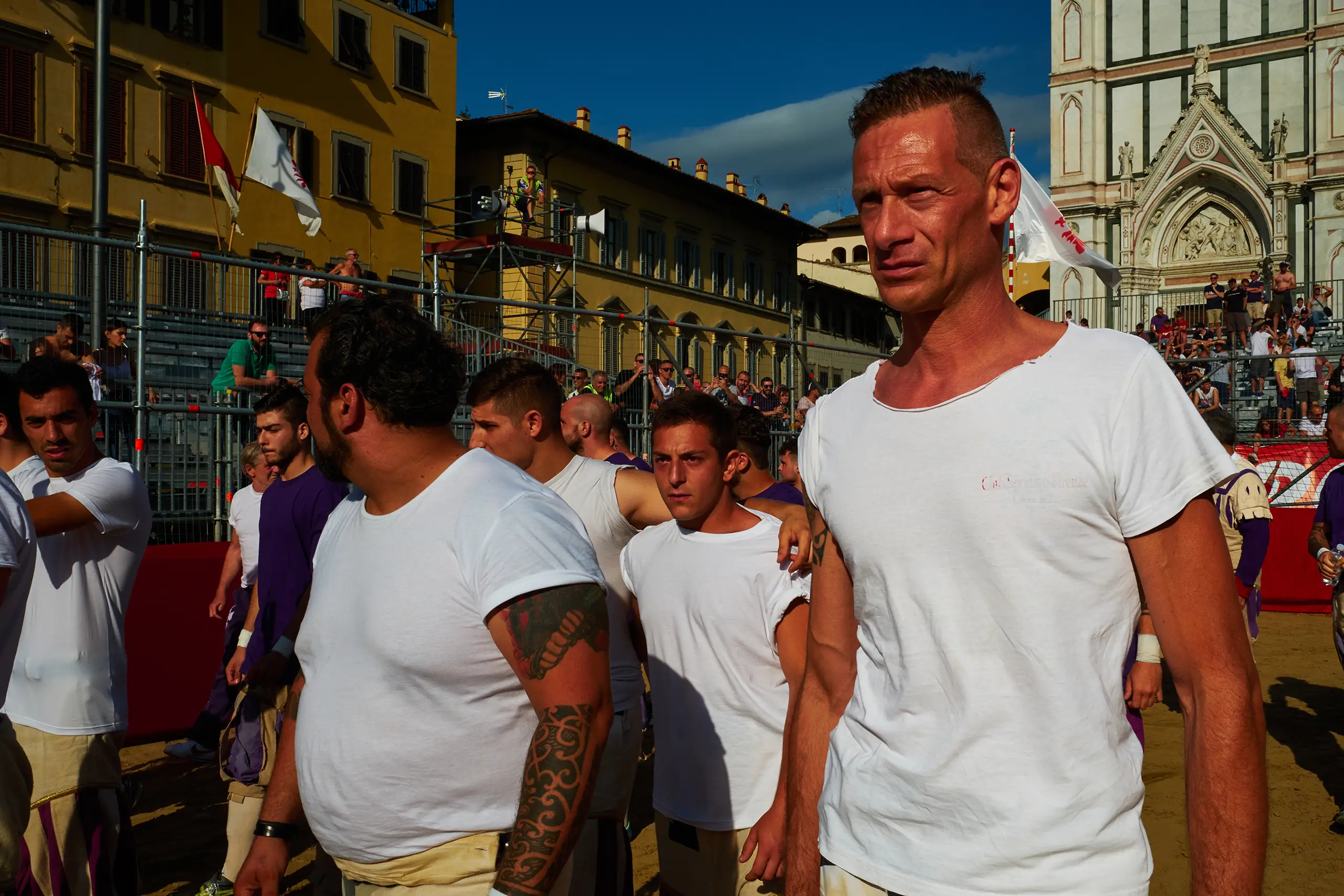
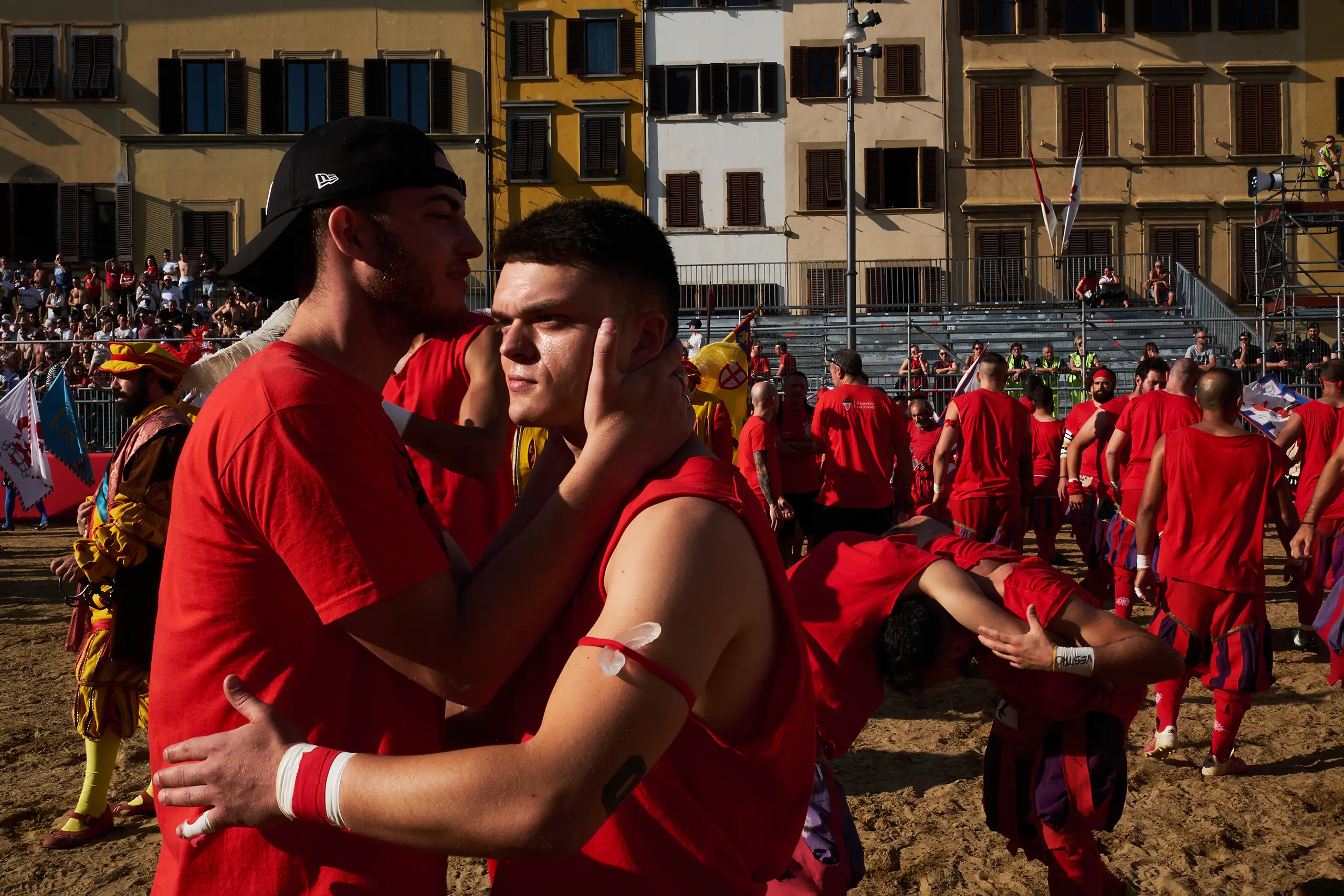
The 2018 edition registers a structural anomaly: due to the withdrawal from the competition by the Azzurri of Santa Croce, the arena hosts an unprecedented match between the Rossi of Santa Maria Novella and a mixed team made up of athletes from the Bianchi of Santo Spirito and the Verdi of San Giovanni.
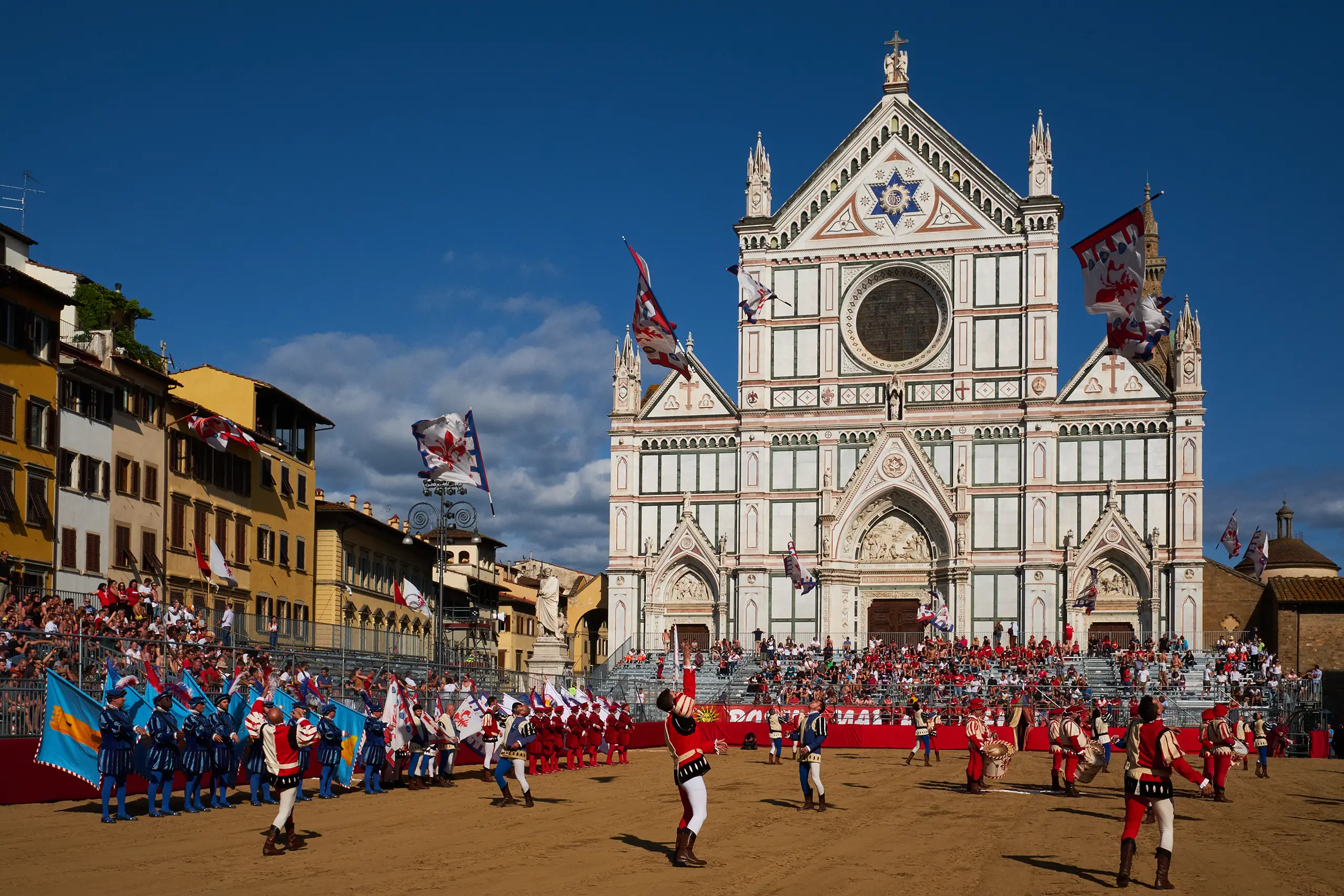
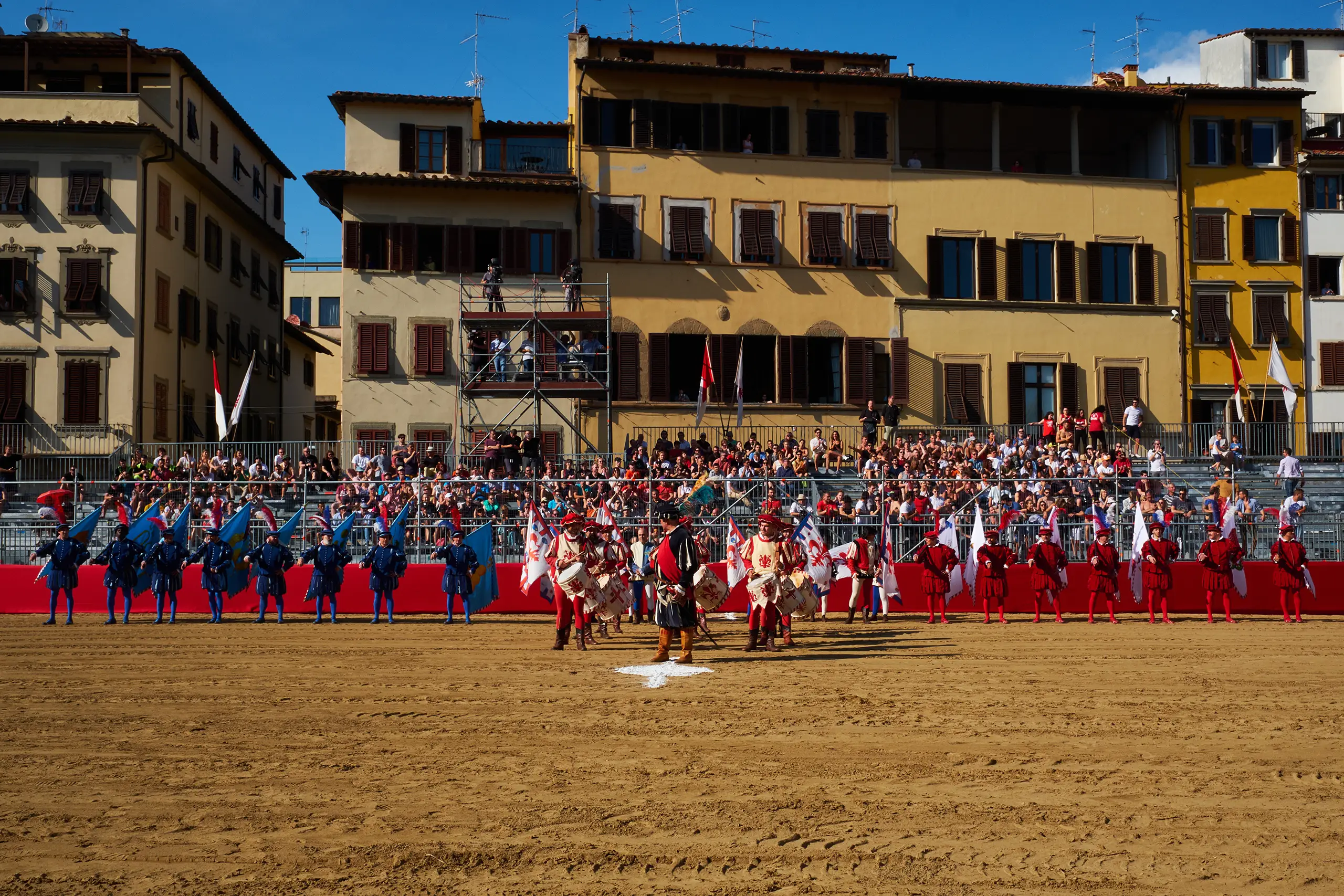
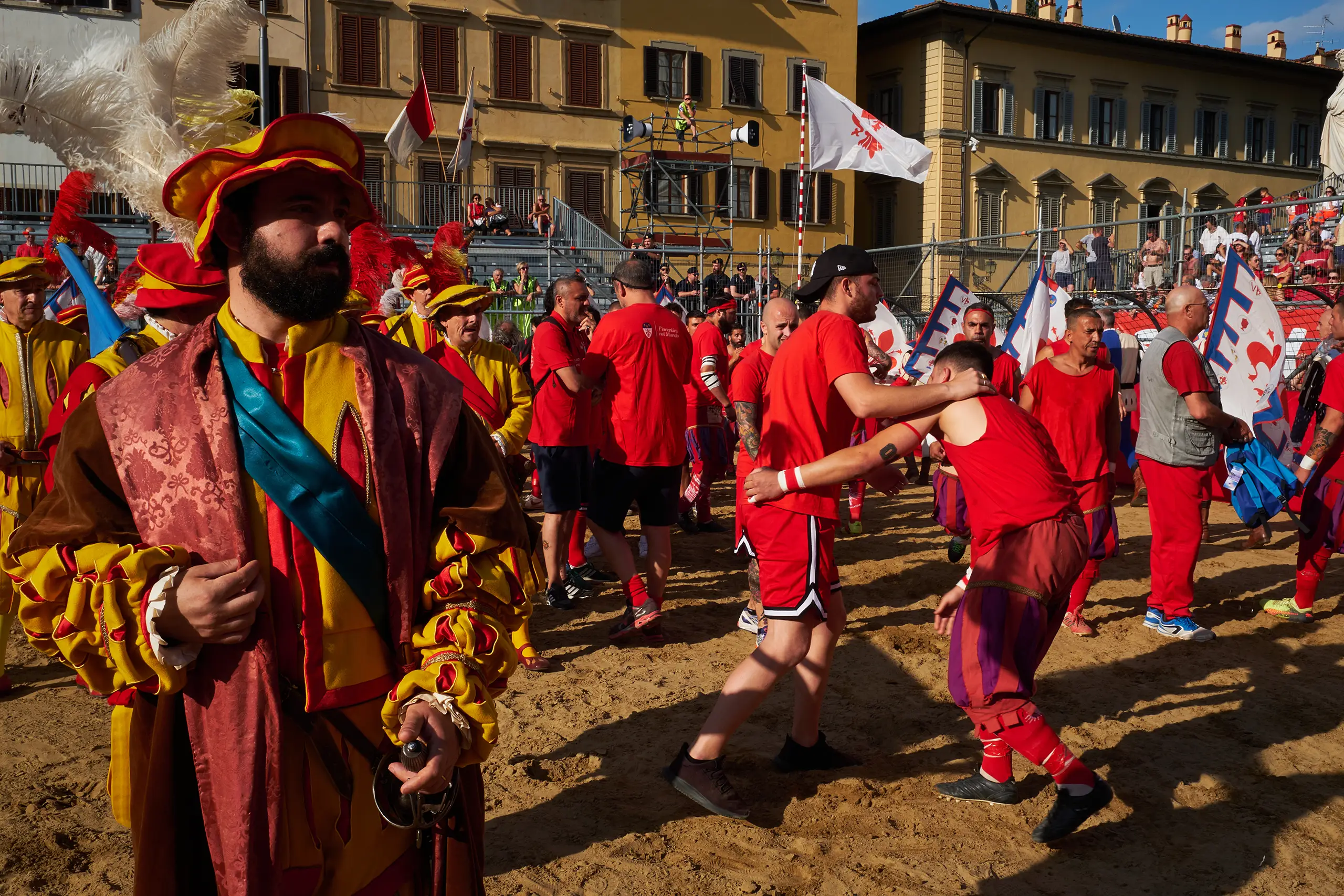
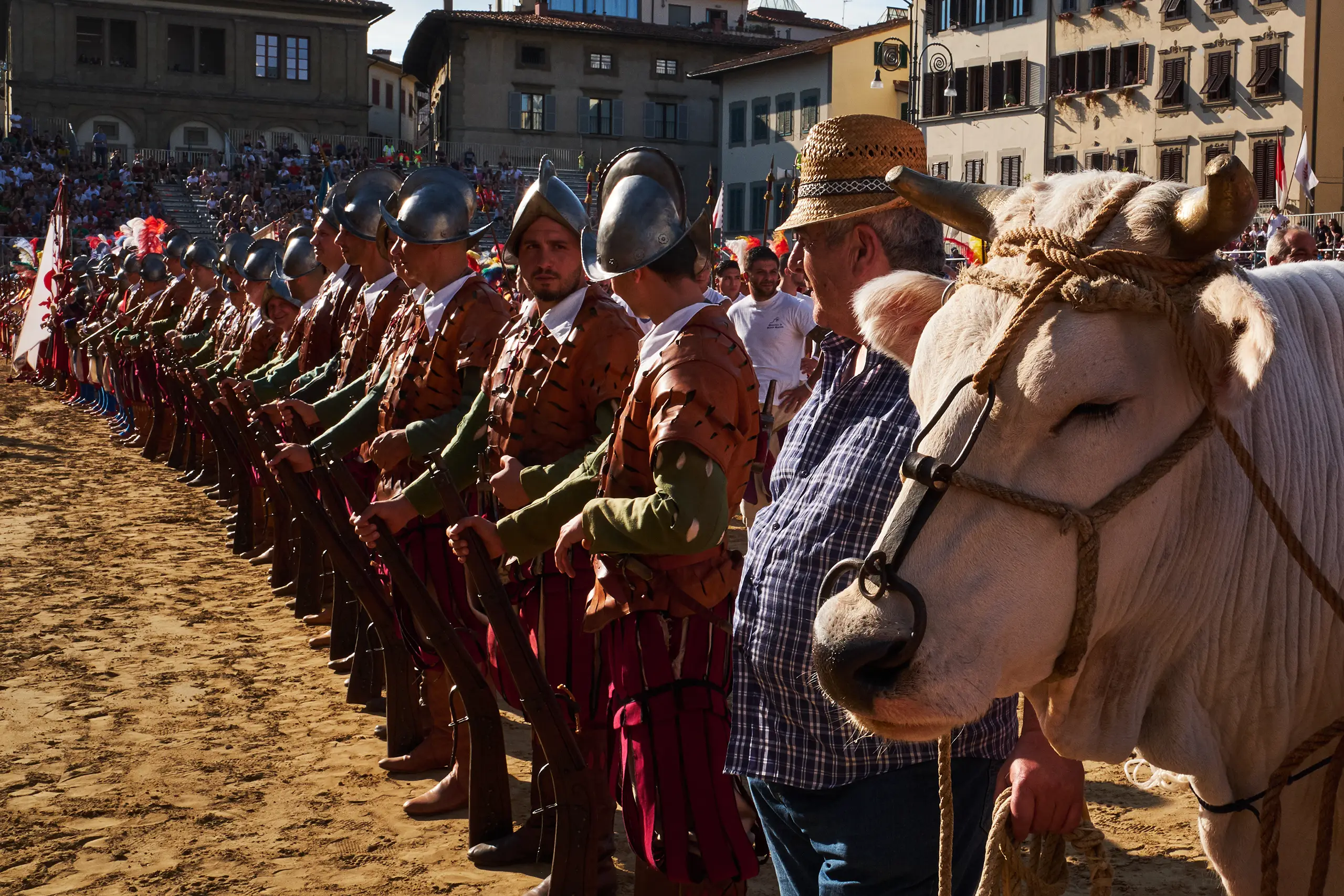
The event, officially revived in 1930 after centuries of decline, traditionally culminates the following week, on 24 June for the feast of San Giovanni Battista, and is preceded by the Corteo Storico della Repubblica Fiorentina, which moves over 500 participants in Renaissance costume from Santa Maria Novella to Piazza Santa Croce.
The 1530 Siege Match and Florence's Four Rioni
Calcio Storico Fiorentino's most celebrated match has nothing to do with sport. During the Siege of Florence of 1529-30, when Imperial and Spanish troops loyal to Emperor Charles V surrounded the city to restore Medici rule over the Florentine Republic, a group of young nobles staged a match in Piazza Santa Croce in full view of the besieging army on 17 February 1530. The game was a deliberate act of defiance: by playing on as if nothing were amiss, the Florentines mocked their attackers' inability to force the city's surrender. The imperial gunners are said to have answered by firing a cannon shot over the heads of the players and spectators, though the match reportedly continued regardless. Florence fell to the siege later that year, but the episode, remembered as the Partita dell'Assedio, became the foundation myth of the game. Calcio Storico itself faded from practice after the 18th century, with the last documented Renaissance-era match recorded in 1739, and lay dormant for nearly two hundred years until it was revived in 1930 to mark the 400th anniversary of that defiant match during the siege.
The four sides that still contest the modern tournament are drawn directly from Florence's historic quarters, one of the clearest surviving traces of the city's Renaissance geography. The Azzurri represent Santa Croce, the Bianchi represent Santo Spirito, the Verdi represent San Giovanni and the Rossi represent Santa Maria Novella, each fielding amateur players recruited from residents of the corresponding rione rather than professional athletes. Two semi-finals played earlier in June whittle the four teams down to the finalists who meet in the championship match on 24 June, the whole tournament framed by the Corteo Storico's procession of Renaissance costume through the city centre. The rivalry between the quarters, and the pride invested in fielding a team representing one's own corner of Florence, is what has kept amateurs willing to take part in a game with no prize money and a well-earned reputation for broken bones. Nearly five centuries after the siege match that inspired it, the tournament still draws large crowds to Piazza Santa Croce each June, filling the same square with a spectacle that mixes historical pageant with genuine, occasionally bloody, competition.